
The Weed-Free Roadmap: Why Cultural Practices Trump Chemical Treatments

For many homeowners, weed control is viewed as a “search and destroy” mission. When a weed appears, the response is to spray it. However, a landscape that relies solely on reactive spraying is a landscape in a state of perpetual failure.
In the horticultural world, a weed is simply an “opportunist.” It is a plant that has evolved to thrive in conditions where the desired turfgrass is struggling. To achieve a truly weed-free lawn in the Houston climate, one must understand the biology of the “Seed Bank,” the physics of mowing heights, and the unintended consequences of the “Swamp Effect.”
1. The “Seed Bank”: Understanding the Invisible Enemy
The first step in weed management is acknowledging that every lawn sits on top of a “Seed Bank.” This is a layer of soil containing thousands of dormant seeds—some of which have been there for years—just waiting for the right combination of light, moisture, and temperature to germinate.Pre-Emergent vs. Post-Emergent Science
There are two primary ways to manage this seed bank:- Pre-Emergent Barriers: These are products applied to the soil that create a vapor barrier or a thin chemical “shield.” They do not prevent a seed from germinating; rather, they stop the emerging root or shoot from developing. If this barrier is broken—through mechanical digging, heavy runoff, or soil compaction—the weeds in the seed bank will immediately break through.
- Post-Emergent Spot Treatments: These are used for weeds that have already matured. These products must travel from the leaf surface down into the root system to kill the plant entirely. This is why the 14-day rule is so important: professional-grade products work slowly to ensure they destroy the root, not just the “top” of the weed.
2. The “Mow High” Rule: Shading the Competition
The single most effective “herbicide” in your arsenal is the height of your grass. In the Houston area, the dominant turf variety is St. Augustine. This grass is biologically designed to thrive when it is allowed to grow tall.Photosynthesis and Soil Temperature
When you mow St. Augustine at its highest setting (typically 3.5 to 4 inches), you are doing two things:- Shading the Soil: Most weed seeds require direct sunlight to germinate. By maintaining a thick, tall canopy of grass, you are physically blocking the sun from reaching the seed bank. You are essentially “starving” the weeds of the light they need to start.
- Cooling the Root Zone: Tall grass acts as insulation for the soil. Lower soil temperatures reduce stress on the turfgrass, allowing it to stay thick enough to choke out invaders.
The “Scalping” Trap
We often see weed breakouts in high-stress areas like fence lines, gate entries, and along patios. This is usually the result of “scalping” with a string trimmer. When the edges are cut down to the dirt, the “shield” is removed. The soil heats up, sunlight hits the seed bank, and weeds germinate within days. To prevent this, the trimmer should be kept at the same height as the mower blade.3. The “Swamp Effect”: How Irrigation Grows Weeds
There is a common misconception that “more water equals more health.” In reality, over-watering is one of the leading causes of weed infestations in Houston landscapes. We call this the “Swamp Effect.”Oxygen vs. Moisture
Grass roots require oxygen to survive. When a yard is kept constantly damp—especially in areas with poor grading or heavy clay—the soil becomes anaerobic (oxygen-depleted). While St. Augustine hates these conditions, many invasive species, such as Sedges and Dollarweed, thrive in them.The “Wash-Out” Phenomenon
Beyond favoring weed-friendly biology, over-irrigation physically damages your defenses. Heavy water movement (either from an inefficient sprinkler head or poor drainage along a fence line) can literally “wash away” the pre-emergent barrier. Once that chemical shield is moved, the weed seeds in the swampy soil have nothing stopping them from taking over.Proper Timing: 4 AM to 8 AM
Irrigation timing is also a factor in disease prevention. Watering in the evening keeps the leaf blades wet for 10–12 hours, creating a perfect breeding ground for Brown Patch and other funguses. A fungal infection thins out the turf, creating “holes” in the canopy that weeds will quickly fill.4. High-Stress Areas and Localized Breakouts
Weeds don’t appear randomly; they appear where the lawn is weakest. By identifying these high-stress zones, you can predict where the next breakout will occur.- Compaction Zones: Paths where dogs run or kids play have compacted soil. Compacted soil has less oxygen, which stunts grass growth but allows hardy weeds with taproots (like Dandelions or Clovers) to move in.
- The “Heat Island” Effect: Areas next to concrete driveways or stone borders stay much hotter than the rest of the yard. This heat stresses the grass and causes the pre-emergent barrier to break down faster than it would in a shaded area.
- New Sod Vulnerability: A brand-new lawn is in a state of high stress. The root system isn’t established, and the “seams” between the pieces of sod are essentially open invitations for the seed bank below to erupt. New lawns require a higher level of patience and more frequent “post-emergent” spot treatments until the canopy fills in.
5. Managing the “Spring-Ready” Roadmap
The battle for a weed-free spring is actually fought in the fall and winter. This is the “Spring-Ready” strategy. If you wait until you see a yard full of weeds in March to begin a program, you have already lost the first half of the year. Many of the most difficult-to-control weeds are “winter annuals.” They germinate in the cool, wet months of October and November, grow slowly underground all winter, and then “explode” the moment the weather warms up. By applying pre-emergent barriers and stopping funguses in the fall, you ensure that the turf enters the spring in a “thick” state. A thick lawn is the ultimate defense; there is simply no physical room for a weed to find a home.Recent Posts
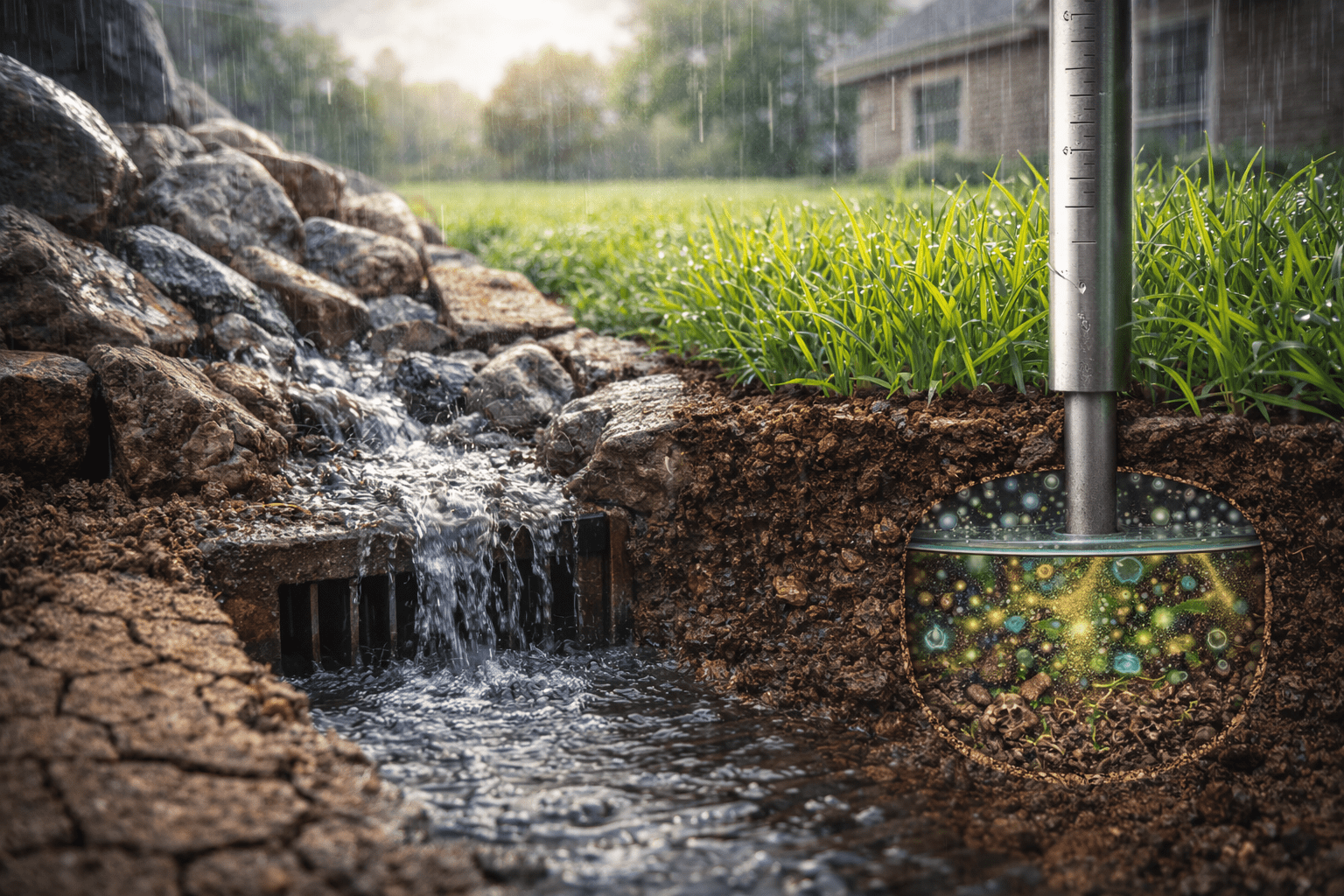
The Hydrological Landscape: Mastering Water Movement and Infiltration in Houston Soil
In the Houston and Magnolia regions, water is both a vital resource and a primary threat to landscape longevity. Between intense summer droughts and flash-flooding rainstorms, a property’s “hydrological design”—how…

The Immune System Landscape: Natural Defense Against Pests and Disease
For decades, the standard approach to landscape pests and diseases has been reactive: wait for a problem to appear, then apply a chemical to kill it. However, modern horticultural science…

The Houston Landscape Management Calendar: A Month-by-Month Technical Guide
In the Houston and Magnolia areas, our “growing season” is nearly year-round. This means the traditional rules of landscaping often don’t apply. Success in our climate isn’t about working harder;…