
The Houston Landscape Management Calendar: A Month-by-Month Technical Guide

In the Houston and Magnolia areas, our “growing season” is nearly year-round. This means the traditional rules of landscaping often don’t apply. Success in our climate isn’t about working harder; it’s about working in sync with the extreme cycles of heat, humidity, and sudden freezes.
The “Spring-Ready” Strategy (January – February)
While the landscape appears dormant, the biological foundation for the entire year is being set now.- Pre-Emergent Defense: This is the critical window for preventing spring weeds. The “Seed Bank” wakes up as soon as soil temperatures hit 55 degrees. Applying protection now is essential.
- The Freeze Assessment: After a deep freeze, resist the urge to prune immediately. Dead foliage actually protects the “crown” of the plant from subsequent freezes. Wait until the threat of frost has passed (usually late February) to perform corrective pruning.
- Dormant Pruning: This is the ideal time for structural pruning on deciduous trees and roses while they are dormant and the branch structure is visible.
The Growth Surge (March – May)
This is the most active time for both the turfgrass and the pests that target it.- The Hybrid Feeding: As the soil warms, transition to the “Heavy Hybrid” feeding program. High-quality synthetics provide the initial “pop,” while organics begin building the “Organic Sponge” for the summer ahead.
- Mowing Calibration: As St. Augustine begins to grow rapidly, ensure your mower is set to its highest level (3.5″ to 4″).
- Enhancement Window: This is the peak time for mulch and seasonal color. Focus on “Recessed Edging” to prevent spring rains from washing new material away.
Summer Resilience (June – August)
The goal shifts from “growth” to “survival.”- Watering vs. Infiltration: Monitor for “hot spots.” If water is running off the curb after 5 minutes, compaction is the issue. This is the prime window for Core Aeration and Compost Top Dressing to break down clay and increase water retention.
- Pest Monitoring: Heat-stressed lawns are magnets for Chinch Bugs and Sod Webworms. A healthy soil biosystem is your best defense, but localized treatments may be necessary if breakthroughs occur.
- Irrigation Audit: Ensure your system is watering between 4 AM and 8 AM to avoid the “Swamp Effect” and evening fungus.
The Fall Defense (September – October)
In Houston, the fall is the most dangerous time for fungal pathogens.- Fungus Prevention: As nights get cooler and rain increases, Brown Patch (Large Patch) becomes a threat. Avoid high-nitrogen fertilizers during this window, as they create tender growth that fungus loves to attack.
- Pre-Emergent Round 2: This is the window to stop winter weeds like Henbit and Chickweed before they germinate in the cool soil.
- Bed Clean-up: Clear out spent seasonal color and refresh mulch layers to protect root flares before the first frost.
Winter Preservation (November – December)
The focus turns to root-zone protection.- Root-Zone Insulation: A thick, organic-rich soil acts as a natural insulator. Ensure your “Organic Sponge” is well-maintained to protect the plant crowns from freezing temperatures.
- Irrigation Adjustment: Turn your controllers down significantly, but do not turn them off entirely. Desiccated (dry) plants are far more likely to die during a freeze than hydrated ones.
Recent Posts
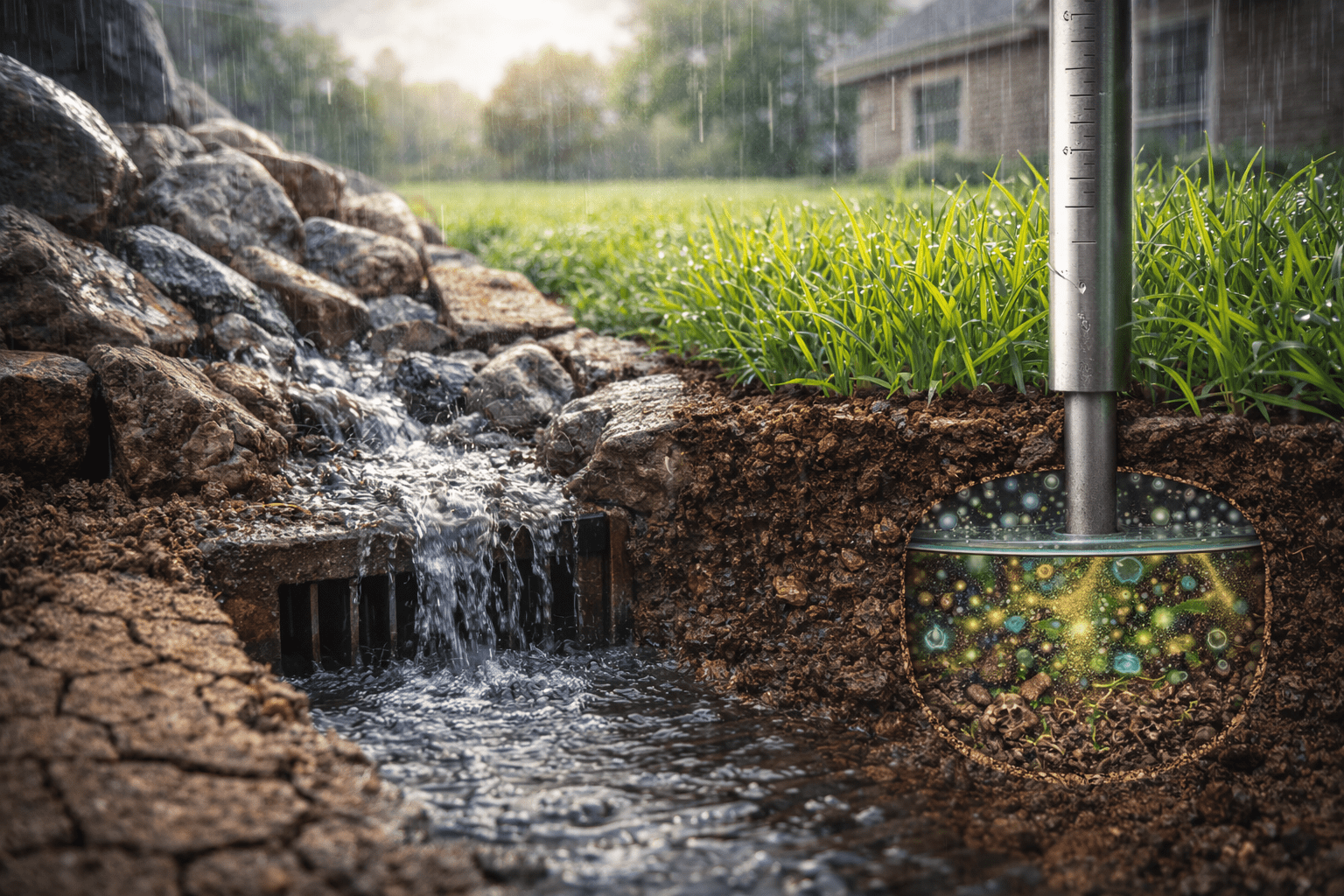
The Hydrological Landscape: Mastering Water Movement and Infiltration in Houston Soil
In the Houston and Magnolia regions, water is both a vital resource and a primary threat to landscape longevity. Between intense summer droughts and flash-flooding rainstorms, a property’s “hydrological design”—how…

The Immune System Landscape: Natural Defense Against Pests and Disease
For decades, the standard approach to landscape pests and diseases has been reactive: wait for a problem to appear, then apply a chemical to kill it. However, modern horticultural science…

The Houston Landscape Management Calendar: A Month-by-Month Technical Guide
In the Houston and Magnolia areas, our “growing season” is nearly year-round. This means the traditional rules of landscaping often don’t apply. Success in our climate isn’t about working harder;…