
When Too Much Slope Becomes a Problem in Magnolia, TX Landscapes
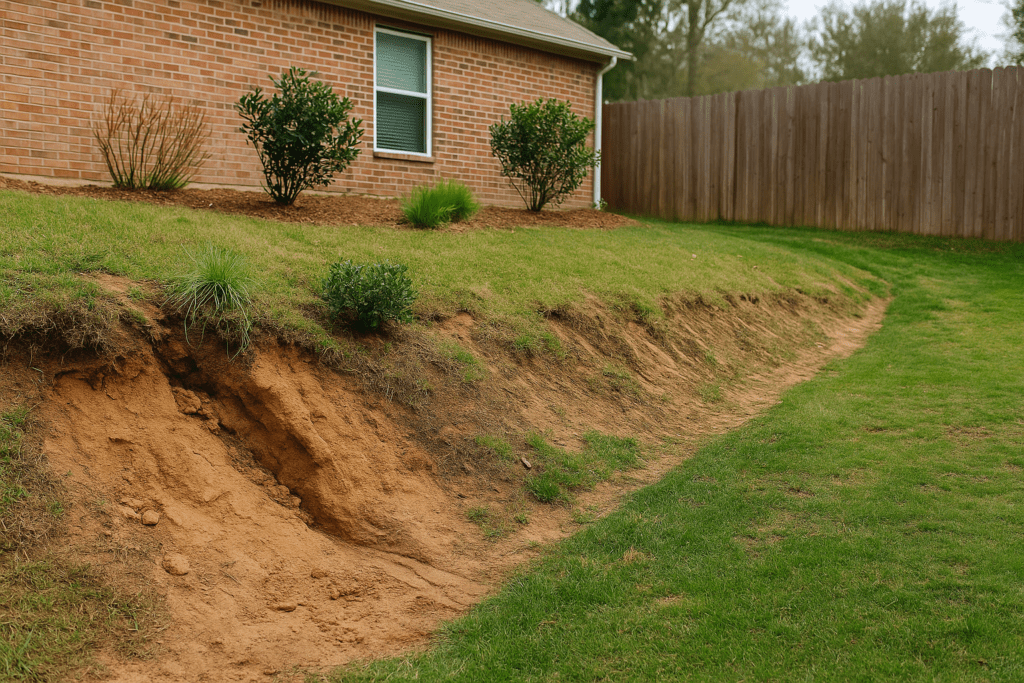
When we talk about drainage in Magnolia, Texas, most people focus on adding slope so water moves away from the home. That’s important — but here’s the catch: more slope isn’t always better. In fact, too much slope can cause just as many problems as too little.
If your yard sends water rushing off instead of letting it soak in gradually, you might be dealing with:
- Washed-out mulch and soil
- Exposed plant roots
- Erosion scars in the lawn
- Standing water or soggy areas at the bottom of slopes
- Unstable walkways or patio areas
The key is balance — enough slope to drain water, but not so much that it damages your landscaping or makes it unsafe to use.
How Steep is Too Steep?
The slope of your yard plays a huge role in how safe, usable, and low-maintenance it will be. Too gentle, and you may have drainage issues. Too steep, and you could be dealing with erosion, unstable surfaces, or even safety hazards.
Here are some practical guidelines:
| Area Type | Maximum Practical Slope | Why It Matters |
|---|---|---|
| Lawn / Play Areas | 4:1 (25%) or gentler | Easier to mow, safe for kids, less erosion |
| Garden Beds | 3:1 (33%) max | Keeps mulch/plants in place, easier maintenance |
| Driveways | ~10–15% | Above this, cars can scrape or lose traction |
| Walkways / Ramps | 8.3% (ADA) | Comfortable and safe for walking or wheelchairs |
| 3/4″ Black Star Gravel | 5–8% | Steeper slopes let gravel migrate downhill |
| Bare Soil | 5–7% | Above this, heavy rain quickly erodes soil |
Pro Tips:
- Gravel areas on steeper slopes should be stabilized with a gravel grid system.
- Bare soil should be planted, mulched, or reinforced to prevent washouts.
- If you’re dealing with slopes over 2:1 (50%), retaining walls or terracing will likely be needed.
The right slope keeps your yard looking great with less maintenance, better drainage, and lower repair costs over time.
The Dangers of Excess Slope in Magnolia’s Clay Soil
In our area, clay-heavy soil already resists water infiltration. Combine that with too much slope and you’ve got a recipe for:
- Severe erosion during heavy storms
- Loss of topsoil that plants need to thrive
- Undermined hardscapes like patios and walkways
- Water pooling at the bottom of slopes, creating new drainage headaches
Fixing an Over-Sloped Yard
If your yard’s slope is too steep, here are some proven solutions:
- Terracing or retaining walls to break long slopes into manageable sections.
- Check dams or stone breaks to slow water and prevent soil loss.
- Dry creek beds or swales to control and direct runoff.
- Erosion-control plants with strong root systems to hold soil in place.
Plan Slope and Drainage Together
When designing or renovating a landscape, slope and drainage should be addressed before planting or building hardscapes. In Magnolia, the sweet spot is about 1/4″ drop per foot for most drainage runs — enough to keep water moving, but not so much that it erodes your yard.
Too little slope leads to standing water. Too much slope causes erosion and structural problems. The goal is a balanced design that moves water efficiently while protecting your investment.
If you’re not sure whether your slope is helping or hurting, we can assess it and create a plan that works with Magnolia’s soil, weather patterns, and HOA requirements.
Next Steps
If you missed our last blog, How to Design for Drainage in Magnolia, TX covers the other half of the equation — what to do when you don’t have enough slope.
Need help with grading, erosion control, or drainage design? Our team at Archer Services specializes in creating outdoor spaces that work beautifully year-round — no matter the weather.
Schedule a Discovery Call or visit archerlawns.com to get started.
Please
Recent Posts

The Hydrological Landscape: Mastering Water Movement and Infiltration in Houston Soil
In the Houston and Magnolia regions, water is both a vital resource and a primary threat to landscape longevity. Between intense summer droughts and flash-flooding rainstorms, a property’s “hydrological design”—how…

The Immune System Landscape: Natural Defense Against Pests and Disease
For decades, the standard approach to landscape pests and diseases has been reactive: wait for a problem to appear, then apply a chemical to kill it. However, modern horticultural science…
The Houston Landscape Management Calendar: A Month-by-Month Technical Guide
In the Houston and Magnolia areas, our “growing season” is nearly year-round. This means the traditional rules of landscaping often don’t apply. Success in our climate isn’t about working harder;…